AI-powered sign language for live streams and OTT workflows
A photo-realistic digital signer expands capacity for streaming, education, and public communication.
Contact usIn partnership with UK-based technology company Signapse, we are introducing a live-capable AI Digital Signer for German Sign Language (DGS).
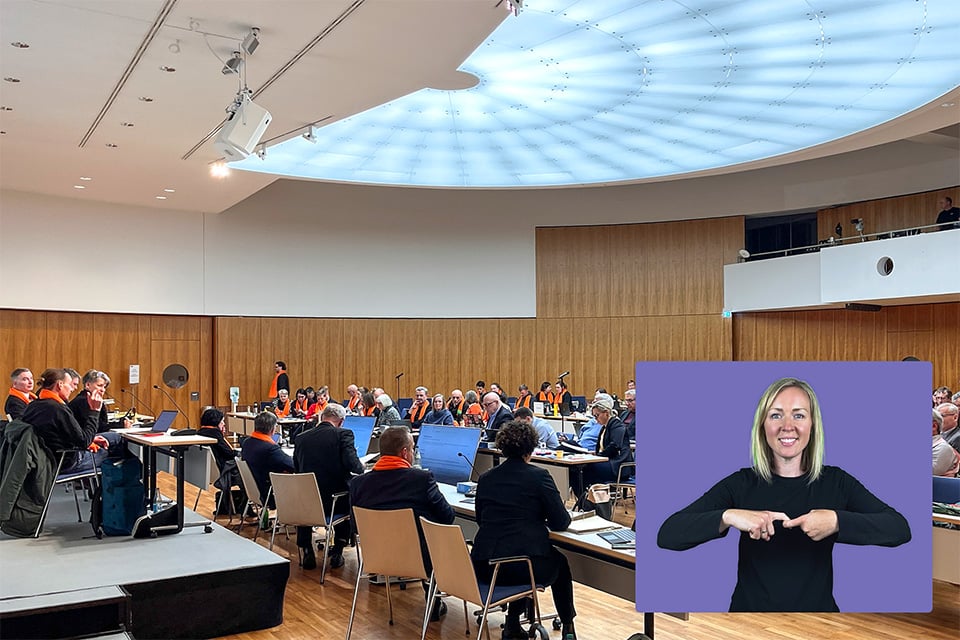
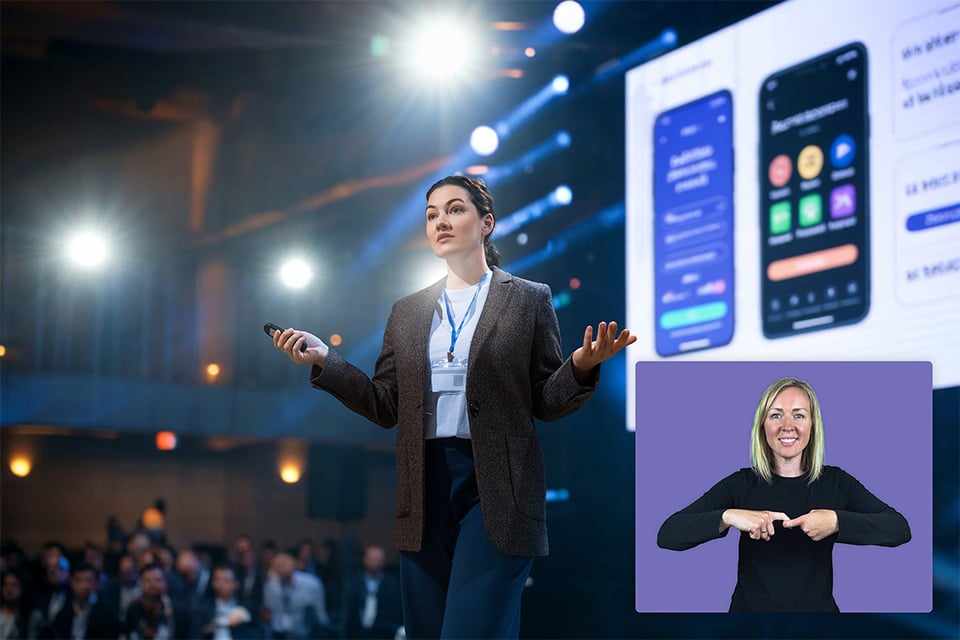
Our solution translates spoken content into a visual language format and integrates it automatically into live streams. This addresses a long-standing gap in accessibility that has proven difficult to close in practice despite clear legal requirements.
G&L CEO Alexander Leschinsky:
"We are excited to extend Signapse’s field-tested, high-performance solution to German Sign Language and to harness AI in a way that creates meaningful, real-world impact."
Mit Klick auf Play stimmen Sie der Datenübertragung an YouTube zu; siehe Datenschutzerklärung.
Subtitles provide access to spoken language, but unlike German Sign Language, they do not convey facial expression, emotional nuance, or the dynamics of a live moment. Text-based communication also presumes strong reading proficiency. Approximately 200,000 people use German Sign Language either regularly or occasionally. For a significant portion of this community, it is their primary everyday language.
German Sign Language has been officially recognised as an independent language since 2002. Deaf and hard-of-hearing individuals are entitled to communication assistance in official contexts, and Germany’s Accessibility Regulation for Information Technology (BITV) defines requirements for digital services. In practice, however, significant gaps remain. Beyond a limited number of news or fictional productions available in sign language, most content in culture, information, and education remains difficult to access. The sheer volume of digital content cannot be covered comprehensively through human interpretation alone, either from staffing or economic perspective.
The Opportunity: Thousands of hours of digital live content that remain difficult to acces
The Partnership: An AI-driven Digital Signer for DGS, powered by Signapse and G&L
The Promise: Accessibility that is operationally and economically viable
The new solution builds on technology developed by Signapse that is already in use in the United Kingdom.
Unlike purely synthetic or stylised avatars, the model was created using extensive video recordings of a professional sign language interpreter from the Royal Association for Deaf People. The linguistic development was carried out in close collaboration with the organisation
The AI Digital Signer is currently deployed within the UK National Rail network, where Deaf passengers receive near real-time updates on delays and platform changes in British Sign Language (BSL). The system is being expanded to American Sign Language (ASL) and will soon be implemented by a major streaming platform. Signapse has received multiple industry awards for its work.
The AI-supported solution is not intended to replace qualified sign language interpreters. In medical, legal, or highly sensitive political contexts, human professionals remain indispensable. The aim is to responsibly bridge the existing accessibility gap.
From conferences and public assemblies to informational services, educational formats, and internal or external corporate communications, the Digital Signer can be flexibly integrated into existing production environments — live and on demand. The solution is also designed for traditional broadcast streaming, including sports events, news programs, magazines, and special reports, enabling seamless integration into both linear and OTT distribution workflows. In addition, G&L is developing a fully EU-sovereign operating version of the service.
Discover how the Digital Signer fits into your existing live or on-demand production environment.