
Press release
Photo-realistic digital signer broadens the reach of German Sign Language (DGS) in streaming, education, and public sector communication
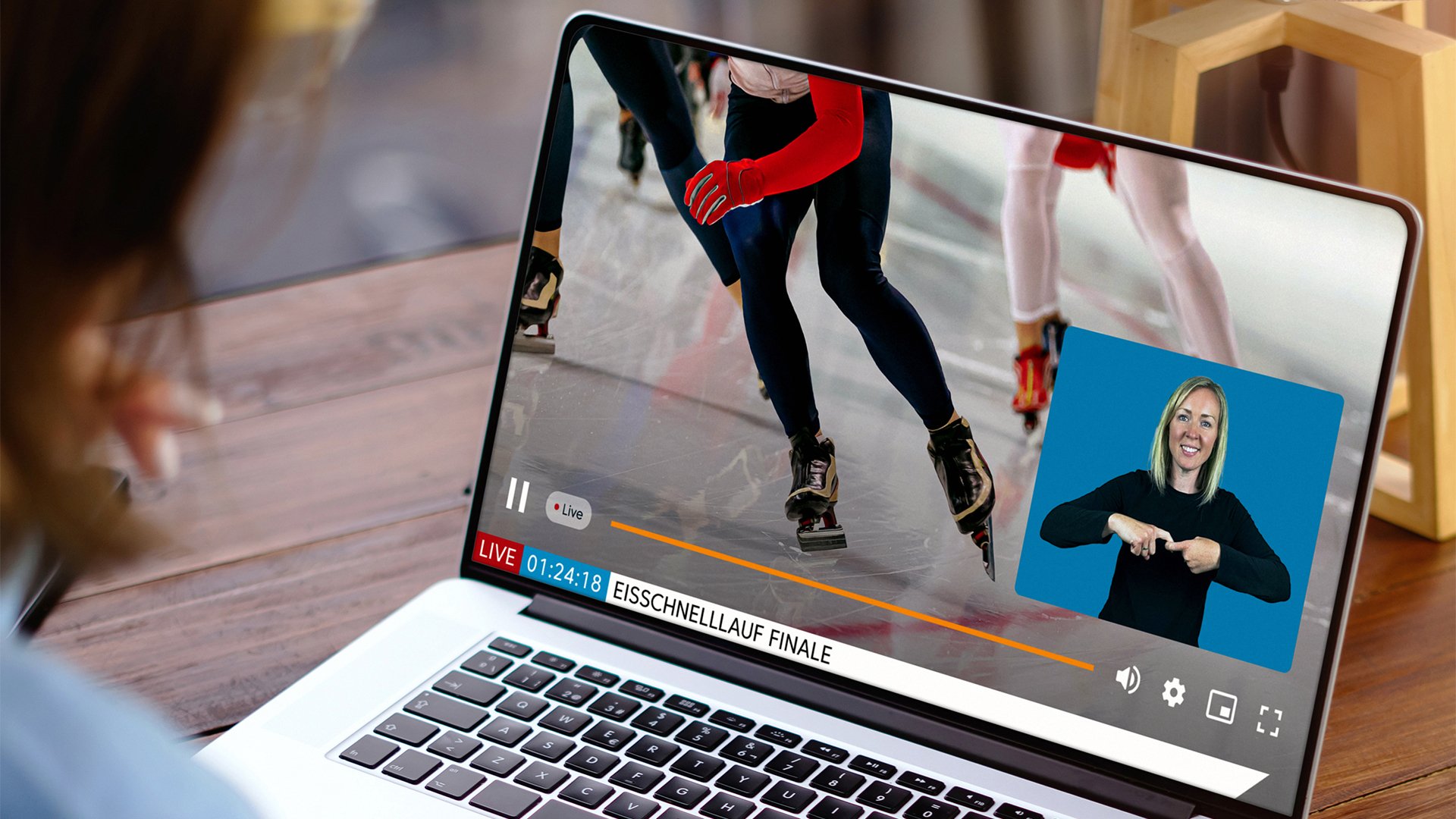
Cologne / Cambridge German streaming integrator G&L Systemhaus, in partnership with British technology company Signapse, today announced the launch of a live-capable, AI-generated Digital Signer for Sign Language.
The technology translates spoken content into German Sign Language and integrates it directly into digital workflows. In doing so, it addresses a long-standing gap in accessibility that has proven difficult to close in practice despite clear legal requirements.
True inclusion begins where subtitles end
Subtitles provide access to spoken language, but unlike German Sign Language, they do not convey facial expression, emotional nuance, or the dynamics of a live moment. Text-based communication also presumes strong reading proficiency. Approximately 200,000 people use German Sign Language either regularly or occasionally. For a significant portion of this community, it is their primary everyday language.
Legally recognized, practically challenging
German Sign Language has been officially recognised as an independent language since 2002. Deaf and hard-of-hearing individuals are entitled to communication assistance in official contexts, and Germany’s Accessibility Regulation for Information Technology (BITV) defines requirements for digital services. In practice, however, significant gaps remain. Beyond a limited number of news or fictional productions available in sign language, most content in culture, information, and education remains difficult to access. The sheer volume of digital content cannot be covered comprehensively through human interpretation alone, either from staffing or economic perspective.
This is where the new solution comes in. It provides a scalable option that enables sign language integration even where time, organisational complexity, or budget constraints have previously limited feasibility.
Photorealistic AI technology with live capability
The new solution builds on technology developed by Signapse that is already in use in the United Kingdom. Unlike purely synthetic or stylised avatars, the model was created using extensive video recordings of a professional sign language interpreter from the Royal Association for Deaf People. The linguistic development was carried out in close collaboration with the organisation.
The AI Digital Signer is currently deployed within the UK National Rail network, where Deaf passengers receive near real-time updates on arrivals, delays, and platform changes in British Sign Language (BSL). In addition to further projects in the UK, the system is being expanded to American Sign Language (ASL) and will soon be implemented by a major streaming platform. Signapse has received multiple industry awards for its work.
„The implementation of the AI Digital Signer for British Sign Language has clearly demonstrated how powerful and production-ready this technology already is,“ said G&L's CEO Alexander Leschinsky. „We are looking forward to transferring the distinctive strengths of Signapse’s solution to German Sign Language. Using AI in a way that delivers tangible value for people and helps alleviate a real structural shortage is a strong motivation for us in developing this product.“
Complementing, not replacing, human expertise
The AI-supported solution is not intended to replace qualified sign language interpreters. In medical, legal, or highly sensitive political contexts, human professionals remain indispensable. Rather, the goal is to responsibly help close the structural gap between high everyday demand and limited professional availability.
„Our mission is to develop our models in partnership with Deaf sign language users, ensuring the language, expression and cultural integrity of the community are respected at every stage,“, said Sally Chalk, Co-Founder of Signapse. „When partners like G&L move from proof-of-concept to product ambition, it signals something bigger: AI sign language is no longer experimental; we can put it in people's hands. This is rock-solid evidence that we will be the accessibility engine for global content providers.“
Streaming expertise with social responsibility
Founded more than 25 years ago in the context of the German television series “Lindenstraße”, G&L Systemhaus was established by Hans W. Geißendörfer and Alexander Leschinsky with the goal of bringing television to the internet. Today, the company develops streaming solutions for public broadcasters as well as for numerous other clients, including the Goethe-Institut, Deutsche Telekom, cities, and regional parliaments. Projects include the global live delivery of European Parliament sessions in up to 32 languages, as well as AI-generated real-time subtitles for municipal assemblies such as those of the City of Potsdam.
The introduction of a live-capable German Sign Language AI Digital Signer marks the next logical step in expanding inclusive digital communication. The solution is currently being prepared for the German market and is expected to be available from autumn. Additionally, G&L is working on a fully EU-sovereign version of the service.